High-potential employees develop fastest when you hand them a real slice of the business to own, coach them through the hard moments instead of rescuing them, and put them in the rooms where senior decisions actually get made. Most companies do the reverse. They promote the person, hand over the keys, and hope. The test for whether development is real is blunt: can each of your high-potential people name the specific thing they are getting better at over the next twelve months, and the person helping them get there. If they cannot, you are not developing them. You are storing up an exit.
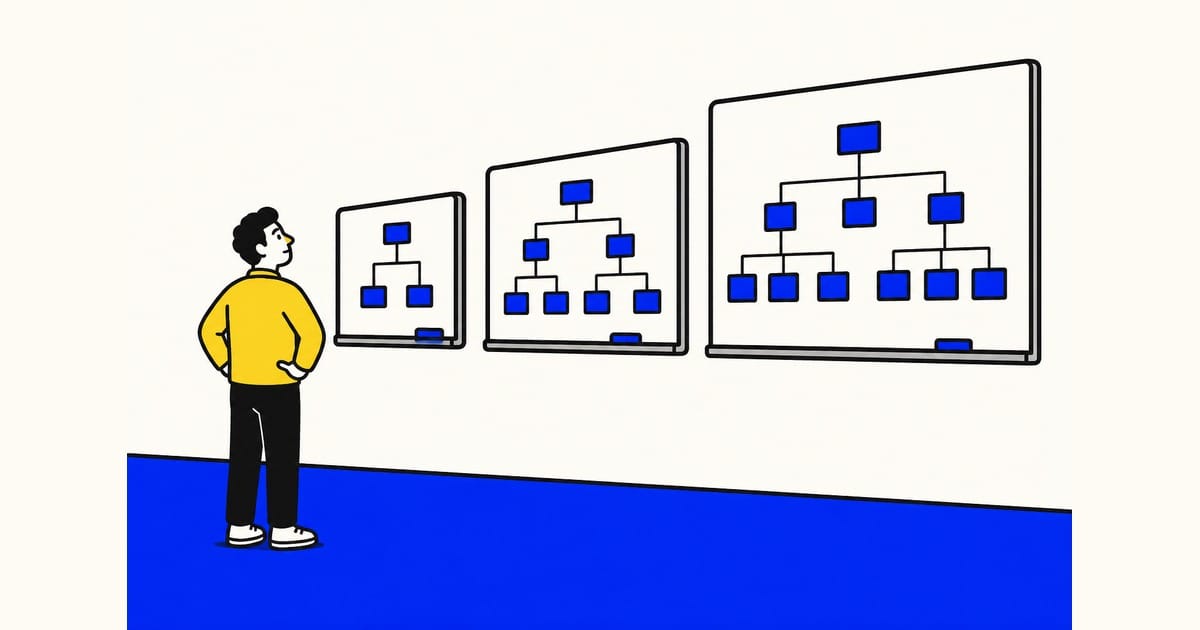
There was one product review meeting at TripAdvisor. I can still see the room. A few years later, a startling number of the people who sat in it were running product at companies you have heard of. Somewhere along the way people started calling it the TripAdvisor mafia. It was not an accident, and it was not a hiring fluke. It was what happens when a company puts high-potential people in front of real stakes, week after week, with senior operators watching and pushing. I have written before about how that meeting ran. What I want to talk about here is the environment that turned a roomful of bright ICs into a generation of product leaders, because I have now walked into a dozen other companies and watched them fail to do it.
How do you actually spot a high-potential employee?
You spot them by what they reach for when nobody asked. High-potential people set priorities for others, not just themselves, and they own outcomes when things break instead of pointing up or down the org chart. Speed and smarts are table stakes. Agency is the tell.
Everybody can name the fast one. Bright, quick, already moving ahead of their peers, sniffing out the problem before the meeting is called. That is easy. The harder read is whether they behave like a driver or a very good helper. Most high-potential people grow up as the team's utility player - the person who fills every gap and fixes every detail. Everybody loves them. And staying that person is exactly what keeps them from leading. I look for the ones who ask the uncomfortable question in the review, who will say no to a senior person and actually mean it, who change direction when the data says to instead of waiting for permission. If everyone is happy and nothing is straining, the person is not stretching yet.
Why do high-potential people leave when nothing looks wrong?
They leave because they stopped learning, stopped being stretched, or stopped believing the company would notice what they were becoming. It is almost never the money first. It is the ceiling they can feel before you can see it.
This is the pattern I see most often walking into companies as a fractional product leader. The org is quietly relieved that a strong person owns their lane, so they leave them alone. No friction, no complaints, good reviews. And that person is nine months from an offer somewhere else, because nobody has changed the shape of their job in a year. I saw it up close as a full-time CPO too. The people who felt seen and stretched stayed through hard quarters. The ones who were left to run quietly, because they were reliable, were the flight risk nobody flagged. Reliability is not the same as growth, and companies confuse the two constantly. When I run a six-month engagement, one of the first things I do is find the person everyone has stopped worrying about, because that is usually the one about to walk. I have written about how much of that early diagnostic work matters.
Reliability is not the same as growth, and the person nobody is worried about is usually the one about to leave.
What did the TripAdvisor rotation program actually get right?
It made development a structure instead of a hope. Ravi Mehta built a PM rotation program that moved high-potential product managers across verticals on purpose, so they collected reps in acquisition, retention, and monetization instead of getting stuck in one lane. That, plus a review meeting where senior leaders pushed hard on real bets, is most of the recipe.
Here is what that combination did that a promotion never does. A rotation forces a person into a domain where they are not the expert, which is the fastest way to build judgment. The product review meeting then gave them a weekly at-bat in front of people like Steve Kaufer and Adam Medros, where they had to defend a bet, sit in the discomfort of being wrong in public, and come back the next week sharper. That is exposure therapy for the next level, run at scale. So many of those people went on to lead product elsewhere not because TripAdvisor hired unusually well, but because the company kept putting them in rooms above their pay grade and coached them through it. Most companies protect their best people from those rooms. That instinct feels like care. It is the thing that stalls them.
What does real coaching look like, and when do you let them fail?
Real coaching is direct questions, not leading ones, and it treats a missed bet as evidence the person is stretching rather than a mark against them. You let them fail when the cost is recoverable and the lesson is theirs to own. Then you run the debrief with them in the driver's seat, and you do not rescue.
This is not performance reviews, and it is not therapy. When I coach a product manager who is ready for more, I sit in on how they run a roadmap review and I challenge the reasoning, not the slides. We rehearse saying no to a favorite senior stakeholder before they have to do it live. And when they fumble something real, I do not swoop in. I coached a strong PM through a botched integration launch with a large partner once, and the useful thing I did was almost nothing. I let them sweat the recovery, and I had them run the post-mortem call themselves. What came out the other side was confidence and a playbook, and the team watched the whole thing. That is the trade. If you rescue, you keep the launch and lose the leader. Coaching this way is a specific discipline, and I have been pretty opinionated about what it is and is not.
How do you build an environment that develops them instead of losing them?
You move them from owning projects to owning problems, you make risk-taking normal and visible, and you signal in plain words that their window is now. None of it requires a high-potential list, an offsite, or an HR program. It requires deliberate moves every week.
The single highest-leverage change is ownership. "Run this feature" and "own this metric" produce completely different people. When I have shaped product orgs, I give each high-potential PM a problem space - acquisition, retention, conversion - and let quarterly planning become their heat to carry. They feel it. They also get room to shape the path, which is where judgment comes from. The rest is rhythm: celebrate the bets that did not pay off out loud so the builders do not get bored, coach in the open but dig into hard lessons in private, and tell people directly when it is their turn instead of making them guess. This work sits right next to how you structure a career ladder, and I go deeper on that in my breakdown of the product management career ladder.
| What you see | The protective instinct | The move that develops |
|---|---|---|
| Strong IC quietly owning their lane | Leave them alone, they are reliable | Hand them a metric and a seat in planning |
| A bet that failed in public | Downplay it, move on fast | Debrief it openly, name the guts it took |
| They are hesitant in a senior room | Keep them out until they are ready | Bring them in, prep them, debrief after |
| A launch they fumbled | Step in and fix it yourself | Let them run the recovery and the post-mortem |
| They are clearly ready for more | Wait for the annual cycle | Tell them today, tie it to a real outcome |
The last column is the whole job. Every move costs you something short term - a slower fix, a messier meeting, a launch that wobbles. That is the price of a leader instead of a very good contributor, and it is cheap.
What is the one trap that stalls high-potential talent?
Control disguised as quality. The leaders who lose their best people are usually the ones micromanaging to protect standards, which reads to a high-potential person as a lack of trust and a hard ceiling.
I have started at nine or ten companies, and I see the same trap in almost all of them. A capable exec keeps the messy, political, high-stakes work for themselves because they can do it faster. Every time they do, they take an at-bat away from the person who needed it. If you are adding rules instead of giving rope, you are the constraint. The high-potential person does not need you to be the safety net under every decision. They need a clear mandate, permission to swing, and someone who will run the debrief with them when they miss. The TripAdvisor mafia did not come out of a company that protected people. It came out of one that kept betting on them in public and coaching them through the fallout.
Developing high-potential employees is the highest-return thing a leader does, and it compounds. Get the environment right, coach hard, let them stumble where it is safe, and a year from now you have a bench of leaders instead of a list of top performers you are afraid to lose.