If you are a product manager deciding which AI tools to pay for, the honest answer is fewer standing subscriptions than the roundups imply, and one that matters far more than the rest. Pay for one general model and build on it. Add a specialist only when it owns a job the general model cannot do. Treat everything else as a monthly experiment you fully expect to cancel.
My entire operation runs on one Claude Max subscription. Ten specialist agents, thirty-four skills, and seventeen scheduled jobs, all on the same plan one person pays for. That is the core business, not a side experiment. Almost every other AI tool I have bought in the last fifteen months, I have since cancelled.
That is the opposite of what the market sells product managers. The category refreshes every quarter with a listicle of twenty tools, and the pitch is always addition. The real skill is subtraction, and it starts with being honest about how few things you actually run on.
The one AI tool that runs the whole business
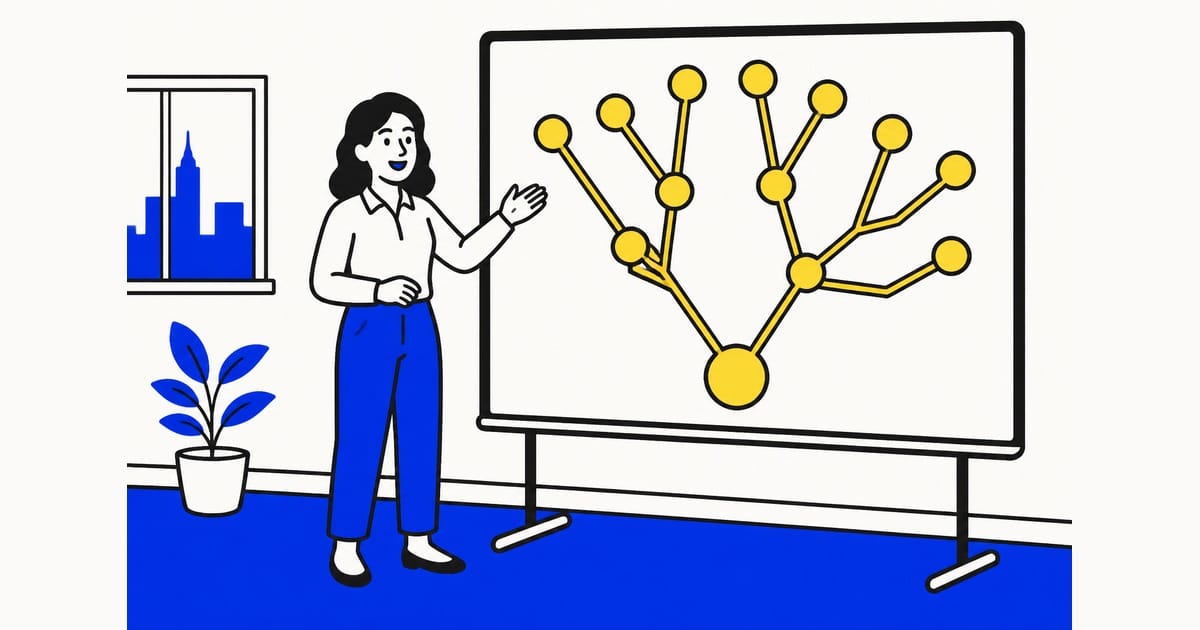
The tool I would not give up is a general reasoning model on a flat monthly plan, because everything I do is built on top of it. In my case that is Claude Max, and it runs an entire agency worth of work off a single subscription. I did not buy ten AI products. I bought one and built ten agents on top of it, each with its own scope, plus thirty-four reusable skills and seventeen jobs that run on a schedule without me.
This is the part the tool roundups miss entirely. The value is not in the model you pay for. It is in the system you build on it. A marketing agent that drafts and stages posts, a finance agent that reconciles invoices, a recruiting agent that moves candidates through a pipeline, all sharing the same underlying model, is worth more than any single-purpose tool sold to do one of those jobs. Most of how I work day to day is that one plan, pointed at different problems by different agents.
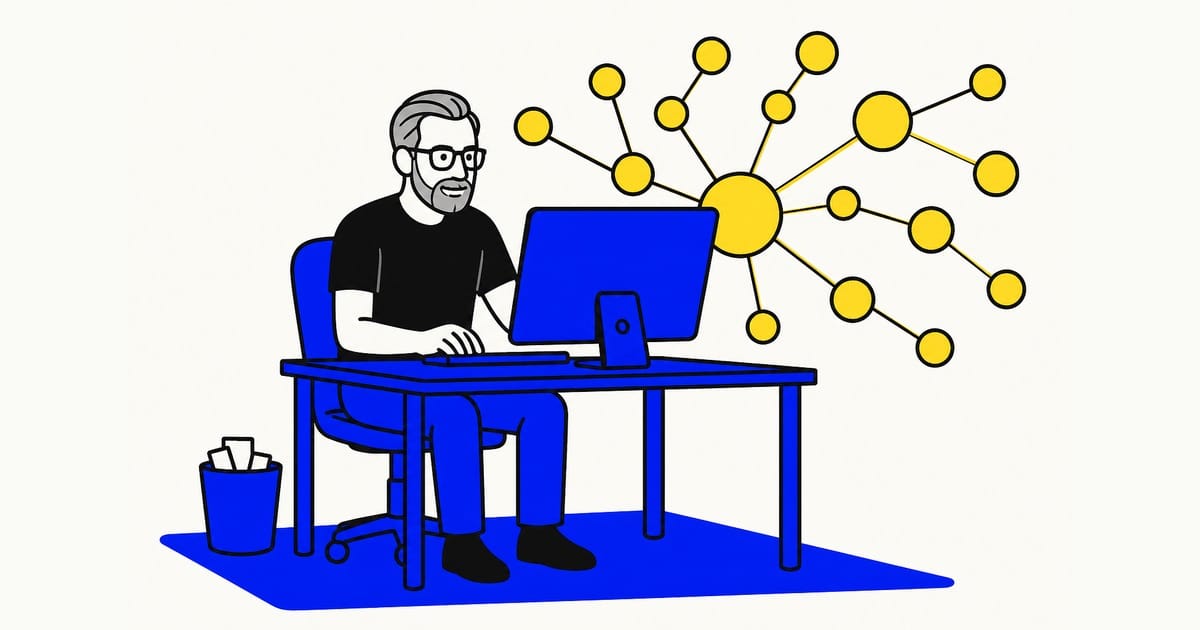
Concretely, the seventeen scheduled jobs run without me starting them. One drafts a blog post from a ranked backlog and stages it for review, which is how the piece you are reading began. Another sweeps every meeting transcript and both inboxes each night and turns loose commitments into tracked to-dos. A third watches for replies on my posts and drafts responses in my own voice. Others refresh revenue and cash dashboards on a cadence so the numbers are current before I look. None of that is a product I bought. It is thirty-four skills and ten agents standing on one subscription, and the model underneath them is the only part with a monthly price.
When I actually pay for the API
I touch the paid API only on demand, and only where the flat-plan model is genuinely worse at something. The clearest case is images. OpenAI's image generation is well ahead of what I can get from Claude, so when I need a graphic for marketing, a Claude agent reaches into my OpenAI Platform account, fetches the image, and comes back.
What I do not do is keep a standing image tool on a monthly bill. The agent calls the API for the one job the core model is weaker at, pays per image, and nothing sits idle between uses. A month of a standing image tool costs more than a year of the handful of images I actually generate, and it adds one more login to keep current. That is the whole logic of the on-demand layer. Pay for the exact capability at the moment you need it, and refuse to convert it into another subscription you will forget you are carrying.
The three AI tools for product managers I pay for on purpose
A specialist earns a standing subscription only when it owns data or an input the general model cannot reach. Three clear that bar for me: Granola, Ahrefs, and Wispr Flow.
Granola sits on every client conversation and turns it into a transcript, and a skill I wrote pulls the commitments I personally own out of that transcript before I close the laptop. The value is not the notes. It is that nothing I agreed to on a call quietly disappears between one engagement and the next. Ahrefs owns proprietary search and keyword data the model was never trained on, which is how I check whether a topic is real before I write about it, including the keyword research behind this post. Wispr Flow turns talking into text, so a first draft can start as me thinking out loud rather than typing.
None of these competes with the general model. Each one owns something it cannot get me, which is the only test that matters for a standing tool. The instinct is old. I have run lean since EditMe, the SaaS company I co-founded, where I instrumented the whole business by hand in SQL rather than buy a tool to fake the report I needed. Reach for the general capability first, and pay for a specialist only when it owns something you genuinely cannot get otherwise.
A specialist earns a standing subscription only when it owns data or an input the general model cannot reach. Everything else is a monthly experiment.
The AI tools for product managers I keep cancelling
Everything outside that core I either spin up on demand or treat as a disposable experiment. Some tools I turn on for a single job and off again. When I need to hire a contractor off the street, I spin up an AI recruiting tool, Ribbon, run the search, and put it down once the seat is filled. It never becomes a standing line on the bill, which is the same logic as calling the image API only when I need a picture.
The rest are experiments, and the discipline is the cancel step. A demo tells you nothing and a month of real use tells you everything, so I buy a month, use it hard, and cancel it if it has not clearly replaced something by the time the renewal hits. That is how I ran a cold-email outbound stack for a season, built on Salesforge, an email tool whose one AI feature I never actually used. I dropped the whole thing when outbound did not win me a single client. The tool was fine. The channel was the problem, and a standing subscription would only have hidden that.
The sprawl is what happens when people skip that cancel step. The average company already pays for about four and a half AI subscriptions, some carrying sixteen or more without noticing, according to spend data from Cledara. One operator spent twenty-eight thousand dollars testing every AI tool for product managers he could find and kept nine. The subscription is the cheap part. The expensive part is the standing attention a half-used tool takes, every week, forever. A tool I half-use is worse than no tool, because it still asks for a slice of my attention every time I decide whether to open it, and it still has to be kept current across every client I serve. The standing cost of a maybe is higher than the price on the invoice, and it never shows up on the invoice.
| Layer | What I pay for | Why it stays or goes |
|---|---|---|
| Core reasoning | One general model on a flat monthly plan | Everything else is built on it. It runs the whole agent system, so it is the last thing I would cut. |
| On-demand API | Image generation, called only when needed | No standing subscription. An agent reaches into it for the one job the core model is weaker at. |
| Specialists | Meeting capture, SEO data, voice input | Each owns data or an input the general model cannot reach. That is the only reason to keep one. |
| Everything else | Whatever I am trialing this month | Bought for a month, cancelled if it has not replaced something by renewal. |
So which AI tools should a product manager pay for
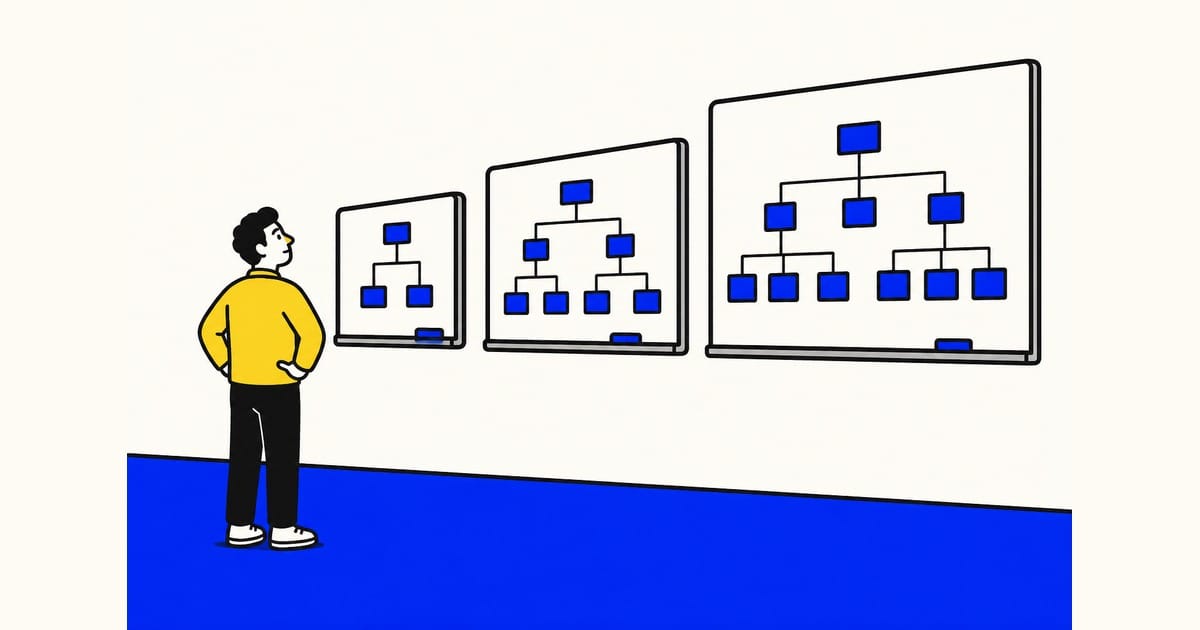
Start with one general model on a flat plan and build your actual workflow on it before you buy anything else. Reach for a paid API on demand, not as a subscription, for the narrow jobs that model is weaker at. Add a standing specialist only when it owns data or an input you cannot get any other way, and hold it to that bar every renewal. Everything else is a trial, and the discipline is cancelling it on schedule.
The counterintuitive part is that this leaves me paying for fewer tools while doing more with AI, not less. The people drowning in subscriptions are usually the ones who never built anything on top of any single one of them, so each tool stays a shallow feature instead of becoming a foundation. Depth on one model beats breadth across ten, and depth is only possible when you stop treating every new release as something you have to own.
The list of tools was never the asset. The asset is the system you build on the one you keep, and the same discipline carries into how a fractional leader works across clients, where the tooling has to travel because you are the constant. It is also the part most of the AI enthusiasm skips. A year from now my specialist tools will have turned over and the core will not. Ten agents on one plan will still beat ten subscriptions nobody wired together. The skill worth building is not collecting AI tools for product managers. It is knowing which single one to build everything else on, and cancelling the rest without regret.