The chief product officer role changes at every doubling of a company, and the version that gets someone hired is rarely the version the company needs a year later. A CPO hired to build from nothing is usually the wrong person to run a sixty-person product org, and the reverse fails just as often. The way to hire well is to name which of three jobs you are filling before you write the job description.
I have held the product exec seat at more than a dozen companies. The title never changed. The job got replaced roughly every time we doubled, even inside the same company, and the three versions below are the ones I kept running into.
What does a chief product officer actually do?
A chief product officer owns the link between what a company builds and why it builds it: the product strategy, the roadmap, the product organization, and the outcomes those produce. That is the glossary answer, and it is true everywhere. It is also close to useless, because it describes the role at rest. The role is never at rest.
Underneath that tidy definition are at least three separate jobs - building product with your own hands, building the systems and teams that ship without you, and building the organization and the executive relationships that let a hundred people point the same direction. Every CPO does all three at some ratio.
How the chief product officer role changes as the company scales
The chief product officer role changes with company scale: at the earliest stage it is hands-on product building, in the growth stage it becomes systems and hiring, and at scale it becomes organizational design and executive politics. The title stays the same. The actual job is replaced roughly every time the company doubles.
This happened to my own job over five years at TripAdvisor, without my ever changing employers. I started running hotel commerce, shipping metasearch price experiments, the kind of work where I could see a test result on Monday and a revenue change by Friday. That job put a hundred million dollars of incremental revenue on the board in six months through A/B tests I was close enough to read line by line. Then the mandate shifted to Instant Booking, and the work became building a new hotel transaction business from zero to two hundred million in annual revenue in eighteen months. Different job. Same person, same title tier, entirely different muscle. By the time I was running product for the hotel business inside an eighteen-billion-dollar company, the work was almost none of the things that got me there. It was org design, cross-team prioritization, and the slow craft of getting senior people to agree.
The pattern repeats at smaller scale and moves faster. As a marketplace CPO at EnergySage, a clean-energy platform, the job was barely about shipping features at all. It was about product positioning, the ideal-customer profile, and deciding which side of a two-sided marketplace to serve first. If I had shown up trying to be the best senior PM in the building, I would have been solving a problem the company did not have.
Even though the CPO title stays the same, the actual job is replaced roughly every time the company doubles.
| Company stage | What they hire the CPO to do | What the job actually becomes | Where it breaks |
|---|---|---|---|
| Zero to one, finding the product | Ship fast and help find product-market fit | Be the sharpest hands-on product mind in the room, next to a founder who still owns the vision | The founder has not let go, so the CPO has no real air to lead |
| One to ten, scaling what works | Own the roadmap and build the team | Install the systems, hire the people, and make yourself unnecessary to daily shipping | The great builder cannot stop building long enough to design the machine |
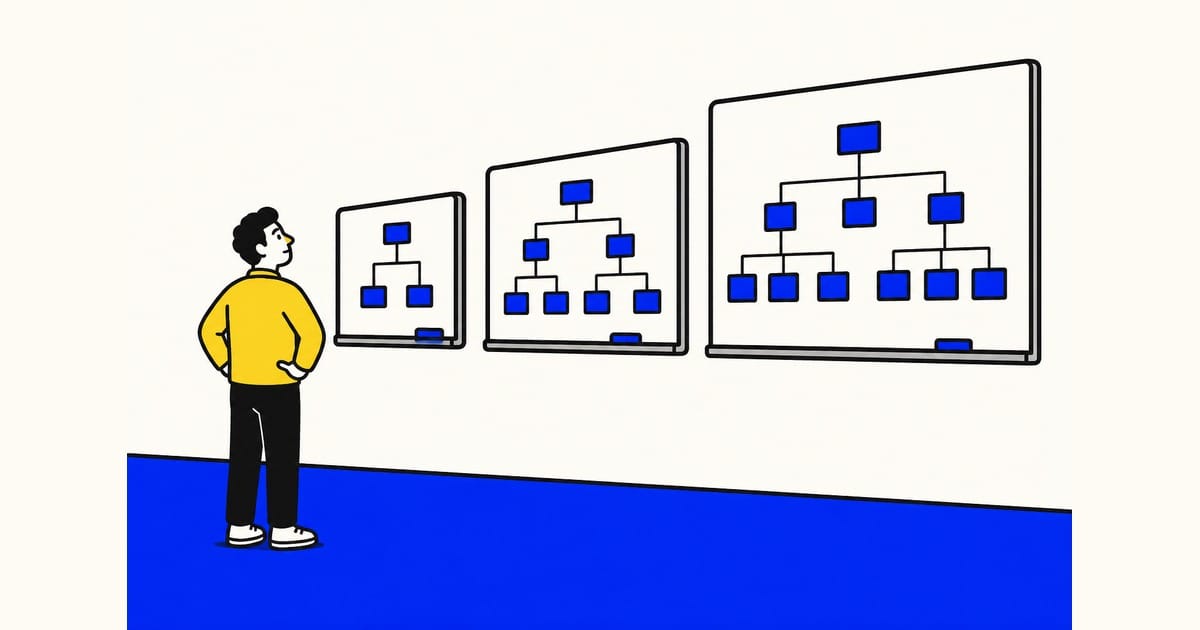
| Ten to a hundred, multiplying the org | Run product at scale | Organizational design, prioritization across many teams, and executive politics | The role turns into management and the product instinct that earned it goes dark |
None of these shifts comes with a promotion or a new title. The person is quietly asked to become someone else while their business card stays the same, and most of the friction inside product organizations traces back to that unspoken swap. Designing the product org that can scale is a different skill from being the best individual product thinker, and the two rarely live in one person at full strength.
The practical tell is to look at where your week actually goes. If most of it is spent inside the product - reviewing designs, arguing over specific bets, unblocking a launch - you are in the build job, whatever the title says. If most of it is spent hiring, defining how decisions get made, and writing the operating cadence, you are in the systems job. If most of it is spent in other executives' offices reconciling their goals with yours, you are in the org job. Companies get in trouble when the person's calendar and the company's stage have drifted apart and nobody has said so out loud.
Why chief product officers have the shortest tenure in the C-suite
Chief product officers have short tenures - one survey of a thousand product leaders put the average at 2.6 years, shorter than CEOs or CTOs - because the role changes faster than the person in it can. The CPO is hired for the job the company has today and measured, eighteen months later, against the job it has grown into. That is a setup where even a strong operator can do everything right and still be the wrong fit for a company that is no longer the one that hired them. Boards rarely read it that way. They see a product leader who delivered for two years and then seemed to lose a step, when what actually happened is that the job was quietly replaced and nobody re-scoped the role, or re-cast the person against it.
The market has started routing around this. Some of the best product and growth operators have stopped trying to be one CPO for one company through every stage of its life. Elena Verna, who ran growth at companies like SurveyMonkey and Miro, now describes herself running fractionally across a handful of businesses at once, matching her time to the stage each one is in rather than riding a single company up the curve. She frames the fractional version of that as high-impact individual-contributor work. It is a rational response to a job that keeps replacing itself: instead of changing who you are every eighteen months, change the company.
The CPO is hired for the job the company has today and measured against the job it has grown into.
When to hire a chief product officer, and which one
Hire a chief product officer when the product decisions have outgrown the founder's calendar. The trigger is real product bets getting made badly or slowly because no one accountable holds both the context and the authority. An org chart with an empty CPO box is a different thing, and filling it on schedule solves nothing.
Then match the person to the stage. A zero-to-one builder and a leader who can run a hundred-person org are different hires, even though the title on the offer letter is identical. If you are pre-product-market-fit, hiring the operator who ran product for a public company is often a mismatch - they will want systems and teams a startup does not yet need. If you are scaling past the point where the founder can hold product in their head, hiring the brilliant tinkerer who has never built an org is the same mismatch in reverse. When the need is real but the stage is early or narrow, a fractional CPO is often the honest answer, because it buys the seniority for the decisions without committing to a full-time version of a role the company will outgrow. The broader case for that model is in the piece on why the good fractional executives are not a cost play.
Most companies hire a chief product officer as if the title were permanent. It isn't. The role is specific to the stage the company is in, and so is the person who is good at it. Operators make the matching mistake: they assume the job that made them great at one stage will carry them into the next. The best product leaders I have worked alongside got honest about which version of the role they are built for, and stopped pretending it was all one job.