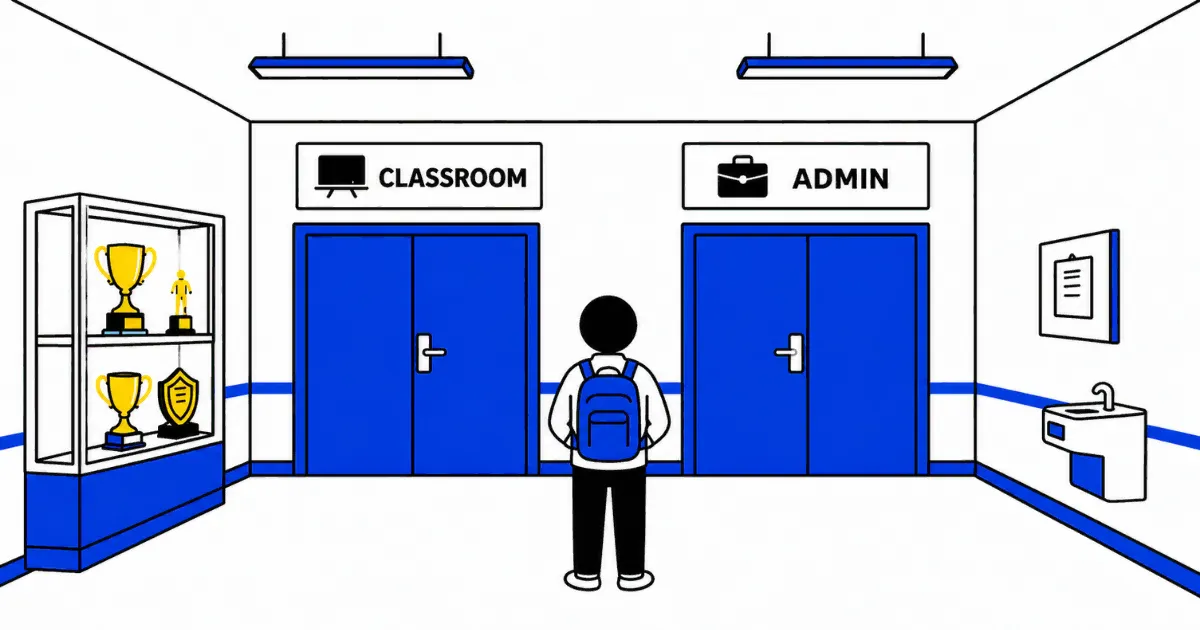
Ed-tech marketplace failures almost always trace back to the same structural problem: the user and the buyer are different people with different incentives, and most products try to serve both without acknowledging the tension. BetterLesson figured this out the hard way, then built something durable by accepting the constraint rather than pretending it away.
I met Alex Grodd when BetterLesson had a few thousand teachers and no business model. It was a two-sided marketplace before most people were using that vocabulary - connecting teachers with professional development resources and lesson plans. The marketplace growth dynamics were the same as any two-sided platform: supply quality, demand acquisition, and liquidity. What made ed-tech different was that the person using the product and the person writing the check were rarely the same person.
What BetterLesson got right early
Alex started from a problem he had personally experienced rather than a market opportunity he had identified from the outside. That distinction matters more than most founders give it credit for. The ed-tech graveyard is full of products built by people who thought they understood education without having lived inside a classroom. Alex had spent two years as a teacher staying late to build lesson plans that nobody could find. That frustration is a better foundation than most pitch decks.
The lesson that stuck from watching BetterLesson's early growth: product-market fit in a marketplace has two dimensions, not one. You need fit on the supply side and fit on the demand side. Getting one without the other is not fit - it is a partially assembled product. BetterLesson had genuine supply quality early. The demand-side challenge was reaching teachers directly rather than through district procurement cycles that moved slowly and rarely put teacher needs first.
Alex's answer was to bypass the institutional sales motion entirely and go direct to teachers. Build something teachers would adopt on their own, prove value at the classroom level, then work up from there. Teachers share things that work. If the product was genuinely useful, word of mouth inside a school building could move faster than any top-down procurement process.
I have thought about that approach many times since in other contexts - at HouseAccount trying to reach homeowners directly rather than through contractor networks, at Arkadium thinking about organic player acquisition versus licensed distribution. The instinct to go where the actual user is, rather than where the institutional buyer is, is usually correct even when it is slower.
The curation problem every content marketplace faces
BetterLesson ran into the problem that every open content marketplace eventually hits. When you let users contribute content, you get volume quickly and quality unevenly. Twelve thousand lesson resources sounds like traction. Some portion are excellent. Most are mediocre. A few are actively bad. The teacher who needs a solid geometry lesson at ten in the evening cannot tell the difference until she has already wasted twenty minutes on the wrong one.
This is not unique to ed-tech. Etsy faces it. App stores face it. YouTube faces it. But teacher resource platforms face it with higher stakes - a bad lesson plan wastes a teacher's preparation time and, downstream, students' learning time. The tolerance for quality variance is lower than in most consumer categories because the cost of a bad outcome is not just a returned item. It is an hour of thirty students' time.
The paid acquisition trap pattern applied here too: content acquisition that does not produce behavioral retention is not building a marketplace. It is renting one. BetterLesson had to make the harder call - invest in quality signals and curation mechanisms rather than optimizing for supply volume. That move is right, but it is expensive. Editorial judgment does not scale cheaply, and algorithmic quality signals in a specialized domain require enough usage data to train on before they work.
In a content marketplace, twelve thousand resources sounds like traction. What matters is whether the person who needs one at ten in the evening can find a good one in three minutes. Volume and findability are not the same problem.
What BetterLesson became - and why it worked
BetterLesson eventually pivoted toward professional development for teachers and school districts. This was a structurally sounder model than marketplace economics at the K-12 level. The professional development model charges a district for something they value institutionally - teacher training, instructional coaching, curriculum support - while still delivering value directly to the people in classrooms.
It is a harder sell and a longer sales cycle. But the unit economics work in a way that ad-supported or freemium models rarely do in education. The district has a budget line for professional development. It does not have a budget line for marketplace subscriptions. Fitting the product to the buyer's existing mental model - and existing budget category - is a go-to-market insight that gets undervalued when the founding team is focused on the user experience rather than the procurement process.
Alex and the team figured this out through iteration rather than from a standing start with a clear model. That is how most real companies find their footing. The original insight - teachers need better access to good lesson resources - was correct. The business model that made it sustainable was not obvious from the beginning, and would not have been findable without the early product work that revealed where the actual constraints were.
The ed-tech lesson that generalizes
The founders who build something durable in education usually start from a problem they lived, not a market they mapped. The ones who stumble are usually solving the institutional buyer's problem at the expense of the actual user's experience - or the reverse, building something teachers love that districts will never fund.
BetterLesson found a path through that tension by proving user value first, then working backward to a business model the institutional buyer would actually pay for. That sequencing is not always available - sometimes the institutional buyer controls access to the user entirely and you have no choice but to sell top-down. But when direct-to-user access is possible, it produces better products and more durable retention than top-down distribution almost every time.
The founders who build something durable in education start from a problem they lived. The ones who stumble are solving the institutional buyer's problem at the expense of the actual user - or the reverse.